What to Wear to an Interview: The One-Level-Up Rule by Industry
What to wear to an interview: a simple one-level-up dress code rule, outfits by industry and role, video interview tips and what hiring managers expect.
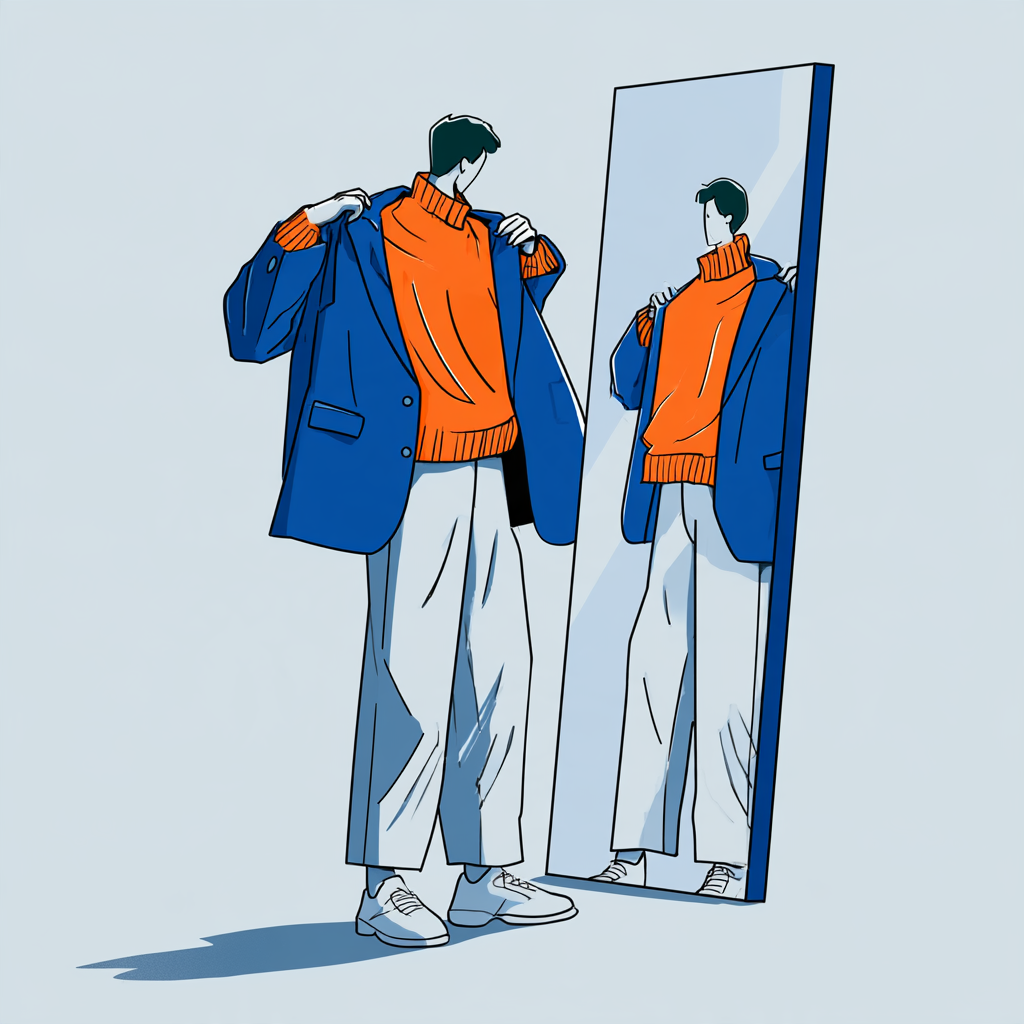
On this pageHow do you decide what to wear to an interview?
Summary
Wear one level more formal than the people already doing the job. Find the dress code from the recruiter, the company's photos or a quick question, then step up once: casual becomes business casual, business casual becomes a suit or blazer. In a 2019 survey of 2,800 managers, only 37% said you should always wear a suit, but 94% said your outfit matters.
The simplest rule for what to wear to an interview is this: dress one level more formal than the people who already do the job. If they wear jeans, wear chinos and a blazer.
Dress codes vary a lot. A bank, a tech startup and a warehouse expect very different outfits. This guide shows you how to find the dress code, what to wear by role, and what to say if your outfit comes up.
Start with the quick-answer table. Find your situation, then copy the outfit or the line.
Quick answers by situation
| Your situation | What to wear or do | Example line |
|---|---|---|
| You do not know the dress code | Ask the recruiter in one line | "What does the team usually wear day to day?" |
| The office is casual (jeans) | Step up to chinos and a blazer or sweater | "I went one notch up from what the team wears." |
| The office is business casual | Wear a suit or a blazer with tailored trousers | "I'd rather be a little overdressed for a first meeting." |
| Finance, law or government | Dark matched suit, leather shoes | No line needed; the suit is the norm |
| Video interview from home | Full outfit, solid deep colors, test on camera | "Happy to stand up; I'm dressed for the office." |
| Signals conflict | Business casual, carry a blazer | "I brought a jacket in case the team is more formal." |
How do you decide what to wear to an interview?
Find out what employees wear day to day, then dress one level more formal. Check the invitation email, the company's careers page and social photos, or ask the recruiter directly. If you still cannot tell, default to business professional for finance, law and government, and business casual with a blazer almost everywhere else.
Most advice stops at "dress professionally." But professional means different things in different places. So use a short decision process instead of guessing.
- Read the invitation Recruiters often state the dress code in the email or calendar invite. If they say "casual" or "business casual," follow it.
- Check the evidence Look at the careers page, team photos and the company's LinkedIn posts. Note what people wear at work, not at parties.
- Ask if unsure A one-line question to the recruiter is normal and shows care. Nobody marks you down for asking.
- Go one level up Casual becomes business casual. Business casual becomes a blazer or suit. Business professional stays a suit.
The four dress code levels
Dress codes usually fall into four levels. Use these as your ladder, then climb one rung.
- Casual: jeans, T-shirts and sneakers.
- Smart casual: chinos, polos, sweaters and clean shoes.
- Business casual: tailored trousers or a skirt, a collared shirt or blouse, and an optional blazer.
- Business professional: a matched suit in a dark color.
Northwestern University's career office still treats the suit as the formal benchmark. It is the safe default when the evidence points to a formal office.
For both men and women, the professional standard is to wear a matched two-piece suit.
Northwestern University Career Advancement, n.d.
How to ask the recruiter about dress code
Asking takes ten seconds and removes the guesswork. Keep it short and practical.
Hi Dana, thank you for scheduling my interview on Thursday.
Quick question: what is the usual dress code for the team? I want to dress appropriately.
Thanks, Sam
If you prefer, use this fill-in version. It works by email, text or phone.
Hi [recruiter name], thanks for setting up my [interview type] on [day].
Is there a dress code I should know about for meeting the [team name] team?
Thanks, [your name]
Do you still need to wear a suit to an interview?
Not always. In a 2019 Robert Half survey of more than 2,800 senior managers, 37% said candidates should always wear a formal suit, and 36% said it depends on the role. Still, 94% said interview attire is at least somewhat important. Suits remain the norm in finance, large companies and East Coast cities.
The suit question splits managers almost evenly. Robert Half's Accountemps survey found that 37% said candidates should always wear a suit, while 36% said attire depends on the position or department1. Another 23% said candidates just need to look professional, and 4% called a suit inappropriate2 for their casual office.
However, almost nobody thinks your outfit is irrelevant. In the same survey, 52% of managers said interview attire is very important and 42% said it is somewhat important. That is 94% in total.
Signals that point to a suit
The same survey shows where suits still win. Treat it as a direction, since the data is from 2019.
- Industry: 46% of managers in finance, insurance and real estate preferred suits, versus 28% in construction and 26% in retail.
- City: 54% of managers in Miami, New York and Washington, DC said always wear a suit.
- Casual cities: Austin and Seattle had the most managers (32%) saying a suit may not be needed.
- Company size: at least 40% of managers at firms with over 250 employees preferred a suit, versus 31% at firms with 20 to 99.
So a large bank in New York calls for a suit. A small design studio in Seattle probably does not.
When in doubt, bring the jacket
If the signals conflict, wear business casual and carry a blazer. Put it on in the lobby if everyone looks formal, or keep it on your arm if they do not. It is the cheapest insurance in your interview outfit.
What should you wear to an interview by industry and role?
Match the outfit to the role's daily dress, then step up once. Finance, law and government call for a suit. Corporate office roles call for a suit or a blazer. Startups and creative teams call for smart business casual. Retail, trades and healthcare call for neat business casual, not uniforms or scrubs, unless the recruiter says otherwise.
Use this table as a starting point. Then adjust it with what you learned from the recruiter and the company's photos.
| Role or setting | Typical daily dress | What to wear to the interview |
|---|---|---|
| Banking, law, consulting, government | Business professional | Dark suit, dress shirt or blouse, leather shoes |
| Corporate office (HR, accounting, sales) | Business casual | Suit, or blazer with tailored trousers or skirt |
| Tech startup or creative agency | Casual | Blazer or sweater, collared shirt or neat top, chinos |
| Retail, restaurants, hospitality | Uniform or casual | Pressed slacks or chinos, collared shirt or blouse |
| Trades, warehouse, construction | Workwear | Clean work pants, polo or button-down, clean boots |
| Healthcare (clinical roles) | Scrubs | Business casual, not scrubs, unless told otherwise |
| Teaching and education | Business casual | Business casual, blazer optional, walkable shoes |
Dress for the person who decides
Your future manager's taste counts more than the office average. Look up the hiring manager's LinkedIn photo and recent conference pictures. If they wear a jacket on stage, wear one to the interview.
Special interview formats
A few formats change the rule slightly:
- Panel: for a panel interview, dress for the most senior person on the panel.
- Group: for a group interview, look polished but approachable, so business casual usually fits.
- Final round: a final round interview often includes executives, so step up if you dressed down earlier.
- Internal promotion: dress more formally than usual. Our guide to internal interview questions explains why insiders should never treat it as a casual chat.
What should you wear to a video interview?
Wear the same outfit you would wear in person, from head to toe. Choose solid, deeper colors such as navy or blue, and avoid busy patterns, stripes, bright reds and shiny jewelry, which look worse on camera. Test the outfit on your webcam first, because you may be asked to stand up.
Video interviews follow the same dress code, but the camera adds rules. The University of Illinois School of Chemical Sciences career office recommends solid colors and notes that deeper blue tones are better than reds for the camera4. It also warns against patterns and shiny jewelry that catches the light.
Dress fully, not just from the waist up. The same Illinois guide points out that an employer may ask you to stand. Then check the frame: a navy top against a white wall reads clearly, while a white shirt can wash you out.
For the rest of your setup, such as lighting, camera height and sound, see our Zoom interview tips. If the company uses recorded answers, our guide to one-way video interviews covers that format.
Related guideZoom Interview Tips: What Matters, In OrderMost Zoom interview tips are 15 equal rules. Only four change the outcome, and for a recorded AI screen the visual ones barely count.What should you not wear to an interview?
Avoid anything that pulls attention away from your answers: wrinkled or ill-fitting clothes, revealing tops, loud patterns, heavy perfume or cologne, noisy jewelry and brand-new shoes you cannot walk in. Washington State University's engineering college also advises against trendy pieces and chewing gum. Clean, simple and comfortable beats fashionable.
The goal is for the interviewer to remember what you said, not what you wore. Washington State University's engineering college lists the common problems: revealing clothing, too many accessories, strong scents and trendy pieces5. It also warns that heavy perfume can trigger allergies.
Do
- Wear clean, pressed clothes that fit you today.
- Choose neutral or dark colors with simple patterns.
- Break in your shoes before the interview day.
- Keep jewelry and accessories minimal.
Don’t
- Wear strong perfume or cologne.
- Show up in a brand-new outfit you have never sat down in.
- Wear the company's competitor's logo or any slogan shirt.
- Dress far more casually than the recruiter suggested.
Why small details still matter
First impressions form fast. Princeton researchers Janine Willis and Alexander Todorov found that people judged traits like trustworthiness and competence from a face shown for just 100 milliseconds6 (2006).
Longer exposure mostly made people more confident, not different. Your outfit is part of that first glance, so a stain or a wrinkled collar can color the next hour.
Can you wear religious dress, tattoos or your own style to an interview?
Yes. Under US federal law, employers generally must accommodate religious dress such as a hijab, turban or yarmulke, and customer preference is not a valid excuse. Tattoos and personal style are less protected, so follow the company's norms. In creative fields, a single signature piece can show personality without distracting.
The US Equal Employment Opportunity Commission is clear on religious attire. Its guidance says employers must generally make exceptions to their usual dress rules for religious garb and grooming7, and that customer preference is not a defense. That protection covers applicants, not just employees.
Tattoos, piercings and hair color are a different matter. They are not protected the same way, so read the company's photos and decide what you are comfortable showing. Many offices no longer care, but conservative firms still might.
Personal style is welcome in creative roles. For instance, a designer might wear one bold accessory with otherwise simple clothes.
What to say if they comment on your outfit
Outfit comments are usually small talk, not a test. Still, a short, relaxed reply keeps the moment easy. Thank them, give one reason, and move on.
[You didn't need to dress up. We're pretty casual here.]
"Good to know, thanks. I wanted to show I take this conversation seriously.
I'd fit right in with the jeans on day one."
[Could you stand up so we can check the room camera?]
"Of course." (Stand, step back, sit again.)
"I dressed for the office, so no surprises below the frame."
If you are clearly underdressed, do not apologize at length. Say "I misread the dress code, so thanks for your patience," then return to your answers.
How should you prepare your interview outfit?
Choose and try on your full outfit two or three days before the interview, so you have time to clean, press or replace anything. Lay it out the night before with your shoes, bag and a backup layer. Check the weather and your route, and pack a small kit for spills or rain.
Most outfit disasters come from rushing. So decide early, then do a full try-on, including sitting down, since that is how the interviewer will see you. For documents and extras, see our guide on what to bring to an interview.
Check as you read
Before your interview day
All 6 done. Next, check your resume against a real job post.
Check my resumeBack to this sectionSaved on this device
Once the outfit is set, spend your remaining time on your answers. Practice your tell me about yourself answer and the common interview questions out loud. Rezoom's AI mock interview lets you rehearse on camera in the outfit you plan to wear.
Look ready, sound ready
with an AI mock interview
Frequently asked questions
Is business casual okay for an interview?
Yes, if the company's daily dress is casual or smart casual. If employees already wear business casual, step up to a blazer or suit.
Can I wear jeans to an interview?
Only if the recruiter says so or the company is clearly casual. Even then, choose dark, clean jeans with a blazer or a neat top.
What color is best to wear to an interview?
Navy, gray, black and other dark neutrals are the safest choices. For video interviews, solid deeper blues read better on camera than reds or busy patterns.
Should I wear a suit to a startup interview?
Usually not. A blazer or sweater with chinos fits most startups better. But if the role is client-facing or senior, a suit is rarely a mistake.
What should I wear to a video interview from home?
Wear the same outfit you would wear in person, including professional pants or a skirt. Choose solid colors and test how they look on your webcam.
Is it okay to ask what to wear to an interview?
Yes. Asking the recruiter about the dress code is normal and shows you care. Keep it to one short question in your confirmation email.
Sources
We opened and read each page below. The small numbers in the text point here. Pages that carry no publication date show n.d.
Robert Half2019
In a survey of 2,800+ senior managers, 37% said always wear a suit, 36% said it depends, and 94% said interview attire matters
press.roberthalf.comPLANSPONSOR2019
In the same Accountemps survey, 23% said candidates just need to look professional and 4% said a suit is inappropriate
plansponsor.comNorthwestern University Career Advancementn.d.
A matched two-piece suit is the professional standard for interviews
northwestern.eduUniversity of Illinois School of Chemical Sciencesn.d.
For video interviews, wear solid colors, prefer deeper blues to reds, avoid patterns and shiny jewelry, and dress professionally on the bottom
scs.illinois.eduWashington State University VCEA2021
Avoid revealing clothing, too many accessories, strong scents and trendy pieces at interviews
vcea.wsu.eduPrinceton University2006
People judge traits like trustworthiness and competence from a face seen for 100 milliseconds
princeton.eduU.S. Equal Employment Opportunity Commission2014
Employers generally must make exceptions to dress rules for religious garb, and customer preference is not a defense
eeoc.gov